United Kingdom · English · GBP
Prices, terms and tax follow the country you choose.
GBP
Prices only. You are always billed in GBP.
An AI Recommended My Startup Before I’d Even Launched. Then It Made Things Up.
Gemini appeared to understand FastFound remarkably well—until I looked closely at what it was actually saying.
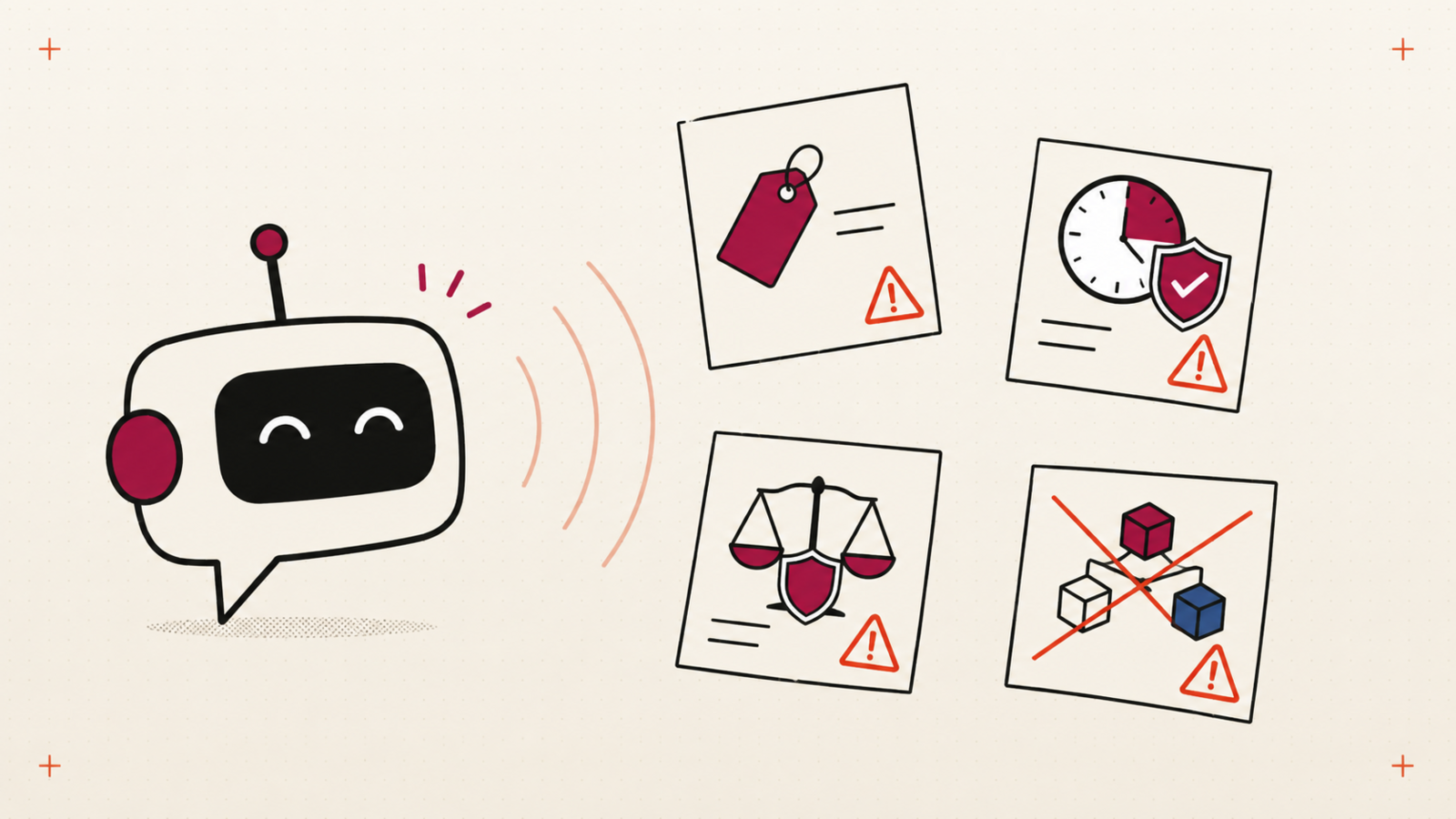
Gemini appeared to understand FastFound remarkably well—until I looked closely at what it was actually saying.
FastFound is still pre-beta.
It has not launched commercially. Its final pricing, service commitments, and technical operation are still being developed.
So I was surprised when Gemini recommended it.
For a brief moment, this felt like a significant breakthrough. An AI system had discovered FastFound, understood what it was trying to do, and considered it worth mentioning.
That was exciting.
It was also dangerous—because much of what Gemini said about FastFound was not true.
The answer I wanted to believe
Gemini did not merely mention FastFound. It presented the product with confidence.
Its answer sounded authoritative. It appeared to understand the problem FastFound was being built to solve and described the product as though it were already an established service.
I really wanted to believe the answer.
That matters, because we tend to scrutinise AI most carefully when it says something obviously wrong or contradicts what we already believe.
We are often far less critical when it tells us exactly what we hoped to hear.
The recommendation was flattering. That made it easy to focus on the apparent achievement—FastFound being surfaced by an AI—rather than examining every claim the AI had made.
When I did examine those claims, the problems became clear.
It invented the pricing
Gemini stated a price for FastFound.
The price sounded plausible. It was presented naturally and confidently, without any indication that it was an estimate or assumption.
But it was not FastFound’s price.
At the time, FastFound was—and remains—pre-beta. The commercial model had not been publicly established in the form Gemini described.
The AI had filled a gap in its knowledge with something that sounded reasonable.
That is one of the more dangerous forms of AI error. A wildly implausible claim is easy to reject. A believable invented detail can pass unnoticed and quickly become accepted as fact.
It invented a service-level agreement
Gemini also described service commitments that FastFound had never made.
Again, the wording sounded entirely credible. It resembled the sort of assurance a mature service might publish as part of a formal service-level agreement.
But no such public commitment existed.
An invented feature is inconvenient. An invented contractual or operational promise is potentially much more serious.
If a prospective customer encounters that claim, they may reasonably assume it came from the company. The fact that an AI generated it does not necessarily reduce the resulting confusion—or the reputational damage.
It invented a liability guarantee
The answer went further and attributed a liability-related promise to FastFound.
That was not a minor misunderstanding. Guarantees and liability commitments carry real commercial and legal significance.
They should be written deliberately, reviewed carefully, and published by the organisation making them.
They should not be improvised by an AI trying to produce a complete-sounding answer.
Yet Gemini presented the claim with the same confidence it used for everything else. There was no visible distinction between verified information and invented detail.
To a reader unfamiliar with FastFound, the whole answer could easily have appeared factual.
It invented the technical architecture
Gemini also described how FastFound supposedly worked behind the scenes.
The architecture it presented was not the architecture I was building.
This creates a different kind of problem.
False technical information can mislead potential customers, partners, competitors, and even people assessing whether a product is appropriate for a particular use.
It can also create expectations that the real product was never designed to meet.
I will not publish FastFound’s algorithms, prompts, infrastructure details, operating procedures, or other elements that constitute its competitive advantage.
But that does not mean an AI is free to fill the silence with an architecture of its own invention.
There is an important difference between information being private and information being unknown. AI systems do not always respect that distinction.
Visibility without factual control
Being recommended by an AI sounds like a marketing success.
For an early-stage product, it may feel like evidence that the brand is beginning to appear in the wider information ecosystem.
But visibility without factual control can be dangerous.
An AI recommendation may place your product in front of somebody new while simultaneously giving that person incorrect information about:
- What the product costs
- What service it guarantees
- What liabilities it accepts
- How its technology works
- Whether it is already available
- How mature the business actually is
At that point, greater visibility does not necessarily mean greater understanding.
It may simply mean that inaccurate information is travelling further.
AI answers can become their own source
There is another concern.
Once an invented claim appears in an AI-generated answer, it can be repeated elsewhere. Someone may quote it in an article, include it in a comparison, post it on social media, or feed it into another AI system.
The original invention can gradually acquire the appearance of corroboration.
Several sources may seem to agree when, in reality, they are all repeating the same unsupported claim.
For a pre-beta company, this can create a public description of the product before the company has properly defined that description itself.
The AI does not need malicious intent to cause this. It only needs incomplete information and a strong tendency to provide a helpful, polished answer.
The uncomfortable lesson
My first reaction was excitement.
My second reaction should have been verification.
That is the lesson I am taking from the experience:
We scrutinise AI less when it tells us what we want to hear.
If Gemini had criticised FastFound or claimed that nobody needed it, I would probably have examined every sentence and challenged every assumption.
Because it recommended FastFound, I was initially inclined to accept the answer.
Flattery can bypass scepticism just as effectively as confidence can disguise uncertainty.
That applies far beyond startup recommendations. Whenever AI confirms our preferred conclusion—about a product, an investment, an argument, or ourselves—that is precisely when we should slow down and verify what it is saying.
What this means for FastFound
FastFound is still being built. It is still pre-beta, and I am not presenting this incident as commercial validation.
An AI recommendation does not prove product-market fit. It does not prove demand, quality, or readiness.
What the experience does show is that companies increasingly need to understand how AI systems describe them—not only whether they appear in search results.
The question is no longer simply:
Can people find accurate information about your business?
It is also:
What will an AI say when the accurate information is incomplete?
In FastFound’s case, Gemini supplied its own answers.
They sounded credible. They were flattering. And they were wrong.
FastFound is still taking shape. To learn what it actually is—and follow its development as it moves towards beta—visit fastfound.co.